The Mi’kmaq, Maliseet, and Peskotomuhkati and their lands, 1786-1878
The 1784 creation of New Brunswick as a colony distinct from Nova Scotia brought unprecedented land pressure to the Mi’kmaq, Maliseet (Wolastoqiyik), and Peskotomuhkati (Passamaquoddy). Loyalist supporters of the losing British cause in the American Revolutionary War (1775-1783) flooded the new colony, bringing a fervent desire not only for self-governance, but also for the land promised them by Britain. By 1786, nearly 15,000 recently-arrived Loyalists occupied the two-year-old colony’s 730,000 km2 of land that had since time immemorial been home to the Mi’kmaq, Maliseet, and Peskotomuhkati. The coming of a colonial infrastructure and non-Aboriginal settlers to Maliseet territory (defined by the Wolastoq – or St. John – River that ran through it), the two Mi’kmaw districts of Kespek (which included eastern and northern New Brunswick), and Siknikt (including the Cumberland County area and eastern New Brunswick), and Peskotomuhkati territory in the southwestern portion of the province would have a profound impact on Aboriginal people.
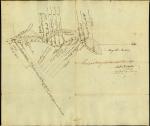
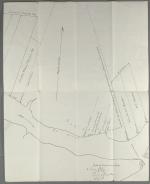
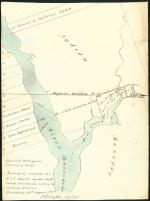
A British colonial enterprise that saw indigenous people around the globe dispossessed of land to make way for British settlement operated in New Brunswick. Never questioning Britain’s right to possess the territory, and asserting that the colony was outside of the purview of the 1763 Royal Proclamation, New Brunswick colonial officials deprived Aboriginal people of land protections and forced them to join the Loyalists (and subsequent newcomers) in petitioning for territory that had for thousands of years been their own. While newcomer petitions were rewarded with deeds, Aboriginal petitioners received licenses of occupation that merely reserved land for their use. Between 1783 and 1810, approximately 100,000 acres, roughly one half of one percent of the colony’s total area, had been set aside for Aboriginal people. Maintaining even this meagre allotment would prove difficult, particularly after 1815, when growing numbers of European immigrants illegally settled on reserve land without colonial censure. By 1838, this encroachment had reduced New Brunswick’s reserved land to just over 60,000 acres.
Disregard for Aboriginal land rights reflected the colonial government’s general lack of concern for their plight. The administration of New Brunswick’s First Nation population — which nominally involved the protection of Aboriginal land and the provision of aid — was left to colonial officials preoccupied with accommodating European settler populations. Unpaid Indian Commissioners, who operated intermittently and on shoestring budgets, accomplished little. Colonial aid was scant and irregular. Moreover, reserve land was afforded little protection as colonial officials’ criticisms of squatting were hypocritically accompanied by legislation that sanctioned illegal European settlement.
Government apathy stood in contrast to benevolent organizations interested in the plight of the Mi’kmaq and Maliseet. Unfortunately, such benevolence did little to improve their lot. In 1787, the London-based New England Company set about “civilizing” New Brunswick Aboriginals through English-language schooling, apprenticeship-based vocational training, and conversion to Protestantism. Administered by the colony’s leading Anglicans, the original plan to establish a series of schools across the colony proved too ambitious and by 1791 just one school at Sussex Vale was operating. In 1826, the school closed when the New England Company withdrew funding. While the scheme’s failure hinged, in part, on parents’ unwillingness to enroll their children, the New England Company also recognized that while the colonial executors of the program showed little humanitarian concern, they had a “superabundance of interest” in Company funds.
In 1812, concerns about Mi’kmaw loyalty spurred the colonial government to donate provisions to the Mi’kmaq of the Miramichi. A year later £50 was put toward relief and, in 1814, the Maliseet of Kingsclear secured a one-time payment of £300. Thirteen years would pass, however, before the new Lieutenant-Governor of New Brunswick, Sir Howard Douglas, recognized that no colonial monies were being granted to First Nations and sought approval from Britain to offer such funds. Granted a miserly £60 by London, Douglas persuaded the colonial assembly in 1827 to allot a one-time amount of £200 for Indian relief. For the next decade small and inconsistent grants were offered to those in the direst of straits.
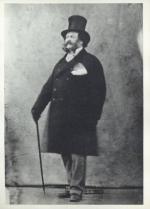
During the 1840s reform-minded politicians briefly sought to improve colonial Indian policy and to more effectively address Aboriginal interests. Moses Perley, named New Brunswick’s Indian Commissioner around 1841, criticized the erosion of Aboriginal land and recommended that clear title to arable land, schooling, and medical services be granted the First Nations. Perley’s efforts were thwarted in 1844, when the colonial government passed legislation that advanced the rights of settlers over those of the Aboriginal people. Squatters were to be entitled to purchase, cheaply, the land on which they had illegally settled and monies thus generated were earmarked to support the Mi’kmaq and Maliseet. Despite Perley’s efforts, the apathy and parsimony characteristic of previous decades of New Brunswick Indian policy persisted.
With Confederation in 1867, control of New Brunswick’s Indian Affairs shifted to Ottawa. Significantly, the new federal government refused to recognize the Peskotomuhkati as a Canadian First Nation. For the Mi’kmaq and Maliseet, Confederation had little immediate impact, with the federal state revealing no more interest in their plight than had the colonial administration. Indeed, Samuel Fairbanks, the last colonial Indian Commissioner in New Brunswick, stayed on as a federal Agent and “found himself pleading for a policy.” Only in 1872 were administrative changes made and the province divided into two agencies, each staffed with a paid Superintendent. Still, New Brunswick’s Indian Affairs administration remained confined to the provision of scant relief and futile efforts at ending trespass on Mi’kmaw and Maliseet land.
Neglectful colonial and Canadian administrations were a double-edged sword. While such neglect in some ways limited the state’s interference in the lives and livelihoods of the Mi’kmaq and Maliseet, it also exposed them to suffering and deprivation and left their land vulnerable to exploitation. Nevertheless, between 1786 and 1878, the Mi’kmaq and Maliseet survived as First Nations in the territories they had always occupied and they did so regardless of the land’s legal designation under colonial law.
Martha Walls
Department of History, St. Francis Xavier University